
Tax consultants and chartered accountants have started receiving a flurry of calls from their clients - both corporate and individuals - seeking clarity over changes in the reassessment regime made during the recently concluded Budget Session of Parliament. Tax experts apprehend the amendments may lead to the income-tax (I-T) department sending out more notices. The new provisions, effective from April 1, have extended the scope for tax sleuths to reopen the past assessments.

The new amendment, which came into force on April 21, has been introduced to detect discrepancies between the expenses and incomes of people who do not have to file tax returns.

The finance ministry (FinMin) has asked Infosys to work on ways to extract and access taxpayers' real-time data faster and accurately as it is crucial for taking decisions on policy changes. While reviewing progress of the income tax portal 2.0, which had faced glitches, the officials also told the Infosys team to increase the scope of pre-filled data in the ITR forms. Senior officials in the ministry held a review meeting last month with the Infosys team and officials of the Central Processing Centre (CPC).

Indians having undisclosed income in the United States (US) may face proceedings under Black Money (Undisclosed Foreign Income and Assets) and Imposition of Tax Act, 2015, this financial year. Also, those named in global leaks may be searched, show-caused, and prosecuted, according to the FY23 internal action plan of the Central Board of Direct Taxes (CBDT). The CBDT has rolled out an aggressive target and timeline to investigate tax evasion matters, especially those involving undisclosed foreign assets.

Companies planning merger and acquisition (M&A) will have to disclose the extent of "complementary linkages" among them and their impact on the market. This comes under the revised reporting requirements of the Competition Commission of India (CCI). The changes will take effect on May 1. Entities may also have to provide market-facing data of the past five years with respect to their market size, the market share of the parties, and also that of the competitors, along with customers and suppliers.

The tax authorities may tell banks and crypto exchanges to report transactions of virtual digital assets (VDAs) as the government begins taxing gains from cryptocurrencies and non-fungible tokens from April 1. So far, the tax department has relied on voluntary disclosures on transactions of VDAs. Once implemented, the sale and purchase of digital assets will reflect in the Annual Information Statement (AIS). The AIS contains details of at least 46 of the financial transactions done by a taxpayer in a financial year.

The Centre has recovered around Rs 95.86 crore from at least 11 crypto exchanges for evading goods and services tax (GST), according to data released by Parliament on Monday. The amount includes interest and penalty. The GST investigation department has detected a total tax evasion of Rs 81.54 crore by crypto exchanges that include WazirX, Coin DCX, CoinSwitch Kuber, Buy Ucoin, UnoCoin and Flitpay, among other exchanges. In a written reply to Lok Sabha, minister of state (MoS) for finance Pankaj Chaudhary said 11 cases of GST evasion by cryptocurrency exchanges have been detected by central GST formations.

While the infection has been mild in most reported cases, those below two years of age are showing signs of acute infection.

'Health will continue to be at the centre of the government's attention as it underpins economic recovery and our collective well being.'

'Whether the substantial hybrid immunity present in India can protect against severe consequences of the disease remains to be seen.'

In a move to plug gaps in the Insolvency and Bankruptcy Code (IBC), the ministry of corporate affairs (MCA) has proposed robust norms against avoidance transactions, wrongful trading, and inordinate delays via changes to look-back period and fixed timelines for the tribunals to reject or approve plans, among other measures. The MCA has proposed that the IBC should provide the adjudicating authority with 30 days for approving or rejecting a resolution plan under Section 31. If a decision is not made on the resolution plan within that period, the adjudicating authority will record reasons in writing for the same, the ministry has proposed.

'There is no emergency of a third wave that we are rushing for booster doses.'

'We have to ensure the European situation does not occur in India and we don't see a spread like theirs.'

The share of total health expenditure as part of the gross domestic product (GDP) went down to 3.3 per cent in 2017-18 from 3.8 per cent in the previous two years, according to the national health account data released on Monday by the health ministry. The share of government expenditure as part of total expenditure as well as GDP has gone up from from 3.78 per cent to 5.12 per cent between 2013-14 and 2017-18, which could also explain a decline seen in out of pocket expenditure in 2017-18. Health ministry also emphasised the increase in the government health expenditure as part of the total GDP from 1.15 per cent in 2013-14 to 1.35 per cent in 2017-18.

'Antiviral treatment will have no change. Spike protein change may affect the immunity protection.'
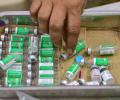
With around 2 million Covid vaccine doses likely to get wasted in December, leading hospital chains have now started to give it gratis to citizens. Sohini Das and Ruchika Chitravanshi report.
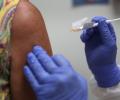
The Union health ministry has directed states to identify all left-out people and ensure everyone gets their Covid jab through initiatives such as workplace vaccination, as part of the government's "Har Ghar Dastak" campaign. Health Minister Mansukh Mandaviya held a review meeting on vaccination progress with Manipur, Meghalaya, Nagaland and Puducherry on Monday. In a tweet, the minister said, "Spoke about augmenting Govt's #HarGharDastak vaccine campaign. Requested help from religious leaders, NGOs & political groups to speed-up vaccination coverage." Health secretary Rajesh Bhushan has asked state officials that workplace vaccination should be organised for targeting people due for their doses.
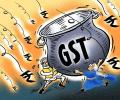
'We have already given Rs 1.59 trillion to states.' 'So, there is no question of giving them more.'

The central government is likely to exceed the budgeted tax collection target of Rs 22.2 trillion for the current fiscal year, led by better indirect tax mop-up, compliance measures, and recovery in most sectors following the second wave of the Covid pandemic. Personal income and corporate tax collections (net of refunds) grew 74 per cent to Rs 5.70 trillion in the first half of the current financial year, driven mainly by advance tax and TDS payments. The target for the current fiscal year is Rs 11.08 trillion; higher taxes are paid usually towards the end of a fiscal year.

Experts, however, feel that given the intensity of the second wave and the high single dose coverage, India is in a good position to avoid any drastic wave in the near future.
 © 2025 Rediff.com - Investor Information - Advertise with us - Disclaimer - Privacy Policy - Sitemap - Feedback - About us - Terms of use - Grievances